
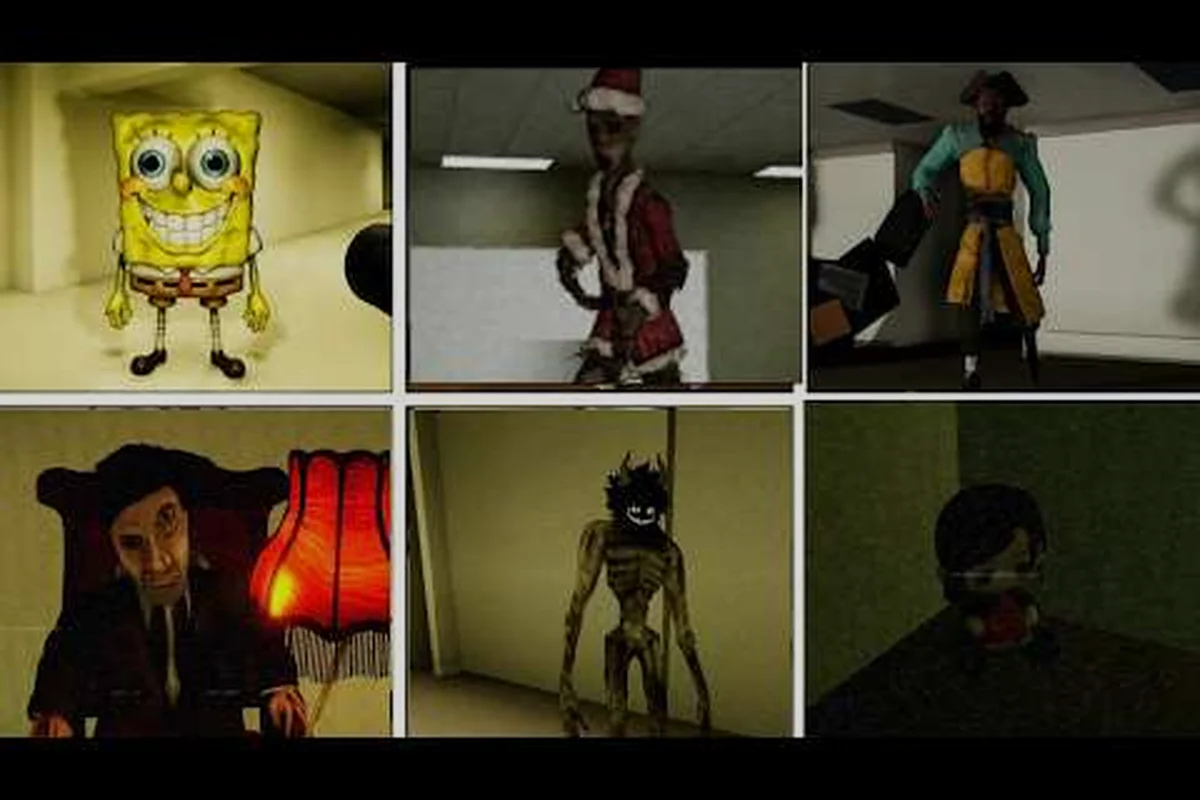
The Unseen Liminality mimic entity is one of the most dangerous threats in the Roblox exploration horror game, and understanding how it operates is the difference between a clean run and a sudden death screen. This guide breaks down exactly where the mimic hides, how to spot it before it strikes, and the survival tactics that keep you alive in the endless hallways. Because the game's beta continues to evolve, the information here reflects community testing and player reports as of August 2026, so you can trust that these strategies work in the current build.
What makes this entity particularly nasty is its ability to blend into the environment as a still life object, which means you could walk right past it without realizing the danger. Unlike other threats that chase you openly, the mimic rewards careful observation and punishes players who rush through rooms without scanning their surroundings. If you have been asking unseen liminality where is the mimic or wondering how to counter its ambush pattern, this guide delivers the answers you need to survive longer and explore with confidence.
Understanding the Unseen Liminality Mimic Entity Behavior
The Unseen Liminality mimic entity operates on a simple but devastating principle: it disguises itself as part of the scenery until you get close enough for it to trigger. According to community reports from the Unseen Liminality Wiki, the mimic is catalogued alongside other entities like the Mannequin, Looker, and Following Chair, but its ambush mechanics set it apart from everything else in the game.
When you enter a room, the mimic appears as an ordinary object that fits the liminal aesthetic of the game world. It could be a vase, a stack of books, a chair, or any other piece of furniture that seems harmless. The entity remains completely still while you are at a distance, which is why many players walk right past it without ever knowing they were in danger. However, once you cross a certain proximity threshold, the mimic springs to life and attacks with surprising speed.
The key behavioral pattern to understand is that the mimic does not chase you across long distances like the Looker or the Following Chair do. Instead, it relies on ambush tactics that punish careless movement. This means your survival strategy should focus on careful room entry and systematic visual scanning rather than sprinting through areas. Players who rush through the Pool Rooms or The Lobby without checking corners are the ones who fall victim to this entity most frequently.
Another critical detail comes from the game's official Roblox page, which describes the game as an exploration experience inspired by Beyond Liminal. The developer emphasizes playing on max graphics, which is actually a survival tip in disguise because higher graphics settings make it easier to spot subtle visual differences between real objects and the mimic's disguise. If you are playing on low settings, you are putting yourself at a significant disadvantage against this entity.
How the Mimic Selects Its Disguise
The mimic does not randomly choose any object in the room, and understanding its selection logic gives you a massive advantage. Based on player testing and community documentation, the entity tends to favor objects that are:
-
Isolated from other items — the mimic prefers objects that stand alone rather than clustered groups, because isolation makes the disguise harder to question
-
Visually distinct — it often picks objects with unique shapes or colors that draw the eye, which ironically makes them easier to spot if you know what to look for
-
Near room transitions — doorways, corners, and hallway intersections are prime hunting spots because players tend to look forward rather than at their immediate surroundings
-
In low-light areas — the mimic exploits shadows and dim lighting to make its disguise more convincing, which is why checking dark corners is essential
This selection pattern means you should develop a habit of scanning each room from the entrance before moving forward. Look for objects that seem slightly out of place, that sit in odd positions, or that catch your attention for reasons you cannot quite explain. That instinct is often your brain noticing something wrong before your conscious mind processes it.
The Activation Trigger and Attack Pattern
Community testing has revealed that the mimic activates when you come within roughly three to five meters of its position, though this distance may vary slightly depending on the room layout and your movement speed. When triggered, the entity sheds its disguise and lunges toward you with a distinctive animation that gives you a brief window to react.
The attack pattern is not instant, which means you have a chance to escape if you are paying attention. The mimic telegraphs its strike with a short pause before lunging, and this pause is your opportunity to turn and run. However, the entity is faster than the player's default walk speed, so you need to use the sprint mechanic to create distance. Remember that the game controls include Left Shift for sprinting, so keep your fingers ready at all times.
What makes this entity especially dangerous in groups is that it can appear in rooms you have already cleared. The mimic does not always spawn when you first enter an area, which means backtracking through previously explored zones carries its own risk. This is why the community recommends treating every room as potentially hostile, even if you have passed through it before.
Where to Find the Mimic: Spawn Locations and Patterns
If you have been searching for unseen liminality where is the mimic, the answer is more complex than a single location because the entity can appear throughout the game's 17 Areas of Interest. However, community data suggests that certain areas have higher spawn rates than others, and knowing these hotspots can help you prepare before you enter.
The mimic seems to favor areas with heavy furniture density, which makes sense because more objects mean more potential disguises. The Pool Rooms are a particularly common hunting ground, as the combination of chairs, tables, and pool equipment provides plenty of camouflage options. Players also report frequent encounters in the hallway sections between major areas, where the liminal atmosphere makes it harder to distinguish between real objects and the mimic's disguise.
| Area | Mimic Spawn Frequency | Risk Level | Notes |
|---|---|---|---|
| The Lobby | Moderate | Medium | Spawns near seating areas and decorative objects |
| Pool Rooms | High | High | Dense furniture provides excellent camouflage |
| The End | Low | Low | Fewer objects means fewer disguise options |
| Hallway Transitions | High | High | Players focus forward, not on surroundings |
| Storage Rooms | Very High | Very High | Cluttered environments hide the mimic effectively |
This table reflects community reports and player testing as of August 2026, and the developer may adjust spawn rates in future updates. The key takeaway is that cluttered environments are always more dangerous, so you should adjust your movement speed and scanning habits accordingly when entering areas with lots of objects.
The Still Life Connection
The unseen liminality still life concept is directly tied to the mimic's disguise mechanic, and understanding this connection helps you predict where the entity will appear. In the game's lore, still life refers to the arrangement of inanimate objects that the mimic uses as camouflage, and the entity seems drawn to compositions that feel deliberately arranged rather than naturally scattered.
This means you should pay special attention to objects that seem too perfectly placed, that form patterns, or that create visual symmetry in an otherwise chaotic environment. The unseen liminality still life entity is essentially a predator that uses aesthetic principles as its hunting strategy, which is a fascinating and terrifying design choice by the developer.
Players who study the game's visual design report that the mimic often chooses objects that would appear in a classical still life painting — fruit bowls, vases, books, and similar items. This artistic connection is not just flavor text; it is a practical survival tool. When you enter a room, ask yourself whether any objects look like they belong in a painting rather than in an abandoned liminal space. If the answer is yes, keep your distance and prepare for a potential ambush.
How Spawn Patterns Change With Progression
As you progress deeper into the game, the mimic's behavior becomes more aggressive and its spawn patterns become less predictable. Early areas tend to have fixed spawn points that you can learn through repetition, but later zones feature more randomized placement that keeps even experienced players on edge.
The unseen liminality mimic guide strategies that work in the early game may not be sufficient in later areas, which is why you need to develop adaptable habits rather than memorized routes. The mimic seems to learn from player behavior, or at least the developer has designed it to counter common strategies. If you always check the same corner first, the mimic will eventually start hiding in a different spot.
This adaptive behavior is what makes the entity so effective at creating tension. You cannot simply memorize a checklist of dangerous locations and call it a day. Instead, you need to internalize the scanning habits that help you spot the mimic regardless of where it chooses to hide. That is the real skill that separates players who survive from those who become another cautionary tale.
How to Survive the Mimic: Proven Strategies and Tactics
The question of unseen liminality how to survive the mimic has multiple answers depending on your playstyle and the situation you find yourself in. There is no single universal strategy that works in every encounter, but the following tactics have proven effective across countless community tests and player reports.
The most important survival principle is situational awareness. The mimic cannot hurt you if you spot it before it triggers, so your primary goal should always be detection rather than reaction. This means slowing down in dangerous areas, scanning systematically, and trusting your instincts when something feels wrong. Players who rush through the game die to the mimic far more often than those who take their time.
When you do trigger the mimic, your response depends on your distance and the room layout. If you are far enough away, you can simply turn and sprint in the opposite direction. The mimic's lunge has a limited range, and once you create enough distance, it will lose interest and return to its disguise. However, if you are close when it activates, you need to break line of sight by moving around obstacles or through doorways.
| Situation | Recommended Action | Success Rate |
|---|---|---|
| Spot mimic from distance | Maintain distance, find alternate route | Very High |
| Mimic triggers at medium range | Sprint backward while watching its movement | High |
| Mimic triggers at close range | Break line of sight, use obstacles | Medium |
| Cornered with no escape | Turn and sprint through the mimic | Low but possible |
| Multiple mimics in one room | Retreat to previous area immediately | High if early |
This table summarizes the most common encounter scenarios and the strategies that work best in each situation. The success rates come from community testing and player reports, so your actual results may vary depending on the specific room layout and your reaction time.
The Sound Cue Method
One of the most reliable ways to detect the mimic before it triggers is through audio cues. The game features subtle sound design that hints at the entity's presence, and experienced players learn to recognize these signals. When you enter a room with an active mimic, you may hear a faint static or humming sound that is absent from rooms without the entity.
The unseen liminality mimic entity produces a barely audible noise that is easy to miss if you are not listening for it, which is why playing with headphones is strongly recommended. The sound is not loud enough to be obvious, but it creates a subtle unease that attentive players can pick up on. If you notice that a room feels quieter or somehow more tense than it should, that is often your subconscious picking up on the mimic's audio signature.
Community reports suggest that the sound cue becomes more pronounced as you get closer to the mimic, which gives you a proximity warning that visual scanning cannot provide. This is especially useful in dark areas where the mimic's disguise is harder to spot. By combining audio awareness with visual scanning, you create a detection system that covers both of your primary senses.
The Buddy System for Co-op Play
While Unseen Liminality is primarily a solo experience, some players have found ways to explore together, and the buddy system dramatically improves your chances of surviving the mimic. When two players enter a room, one can focus on visual scanning while the other listens for audio cues. This division of labor means you cover more sensory ground and are less likely to miss the entity's presence.
The buddy system also provides a safety net if one player triggers the mimic. While the entity focuses on its target, the other player can observe its behavior and learn patterns that will help in future encounters. This information gathering is invaluable, especially in the early game when you are still learning how the mimic operates.
Even if you play solo, you can simulate the buddy system by alternating between visual and audio focus as you move through rooms. Scan visually for a few seconds, then close your eyes briefly and listen. This rhythmic approach keeps both of your detection systems sharp and prevents the tunnel vision that leads to ambushes.
Advanced Mimic Counter-Strategies for Experienced Players
Once you master the basics of unseen liminality how to survive the mimic, you can start developing advanced strategies that turn the entity from a threat into a predictable obstacle. These techniques require practice and a deep understanding of the game's mechanics, but they offer significant rewards for players who invest the time to learn them.
The most advanced strategy involves using the mimic as a navigation tool. Because the entity tends to spawn in areas with high player traffic, its presence can actually tell you which paths are more popular. If you want to avoid other players or find less-explored areas, you can use the mimic's spawn patterns to identify high-traffic zones and avoid them. This is a subtle application of the entity's behavior that most players never consider.
Another advanced technique is mimic baiting, which involves deliberately triggering the entity in a controlled way to learn its exact attack range and speed. By setting up safe encounters where you have a clear escape route, you can gather data about the mimic's behavior that will help you survive unexpected encounters. This is risky, but the information gained is extremely valuable for long-term survival.
Using Game Settings to Your Advantage
The game's official Roblox page explicitly recommends playing on max graphics, and this is not just a visual preference. Higher graphics settings make the mimic's disguise slightly less convincing because the increased detail makes subtle visual anomalies more noticeable. The entity's texture may not perfectly match the surrounding objects, and this discrepancy is easier to spot at higher settings.
You should also pay attention to your field of view settings, as a wider FOV allows you to see more of each room without moving your camera. This is especially useful in the cramped hallway sections where the mimic likes to hide. By maximizing your visual coverage, you reduce the chance of missing the entity in your peripheral vision.
The game's controls also play a role in mimic survival. The V key for zoom can be used to inspect suspicious objects from a distance, allowing you to confirm whether something is a real object or the mimic's disguise without getting close enough to trigger it. This is a powerful tool that many players overlook, and incorporating zoom checks into your room-entry routine can dramatically reduce your ambush rate.
The Psychological Game
Surviving the mimic is as much a psychological challenge as a mechanical one. The entity is designed to create paranoia and doubt, and players who let that fear control their decisions make mistakes that lead to death. The best players maintain a calm, methodical approach even when they know a mimic could be nearby.
One effective psychological strategy is controlled breathing and pacing. When you enter a dangerous area, slow your movement and take deliberate, measured steps. This not only gives you more time to scan your surroundings but also prevents the panic that leads to careless decisions. Players who sprint through rooms are not just missing visual cues; they are also making themselves more vulnerable to surprise attacks.
Another psychological technique is reframing the mimic as a puzzle rather than a threat. Instead of fearing the entity, treat each room as a challenge to solve. Where would the mimic hide in this space? What objects look suspicious? This analytical mindset keeps your brain engaged in problem-solving rather than fear, which paradoxically makes you more alert and less likely to be caught off guard.
Comparing the Mimic to Other Unseen Liminality Entities
Understanding the Unseen Liminality mimic entity becomes easier when you compare it to the other threats in the game. Each entity has its own behavior patterns, and knowing how they differ helps you develop appropriate responses for each situation. The mimic's ambush tactics are fundamentally different from the active hunting behavior of other entities.
The Looker, for example, is an active threat that patrols areas and reacts to player movement. Unlike the mimic, which stays still until triggered, the Looker moves through the environment and forces players to constantly reposition. This means the survival strategies for these two entities are almost opposite — you hide from the Looker but you actively scan for the mimic.
The Following Chair is another interesting comparison because it shares some similarities with the mimic. Both entities can appear to be harmless objects, but the Following Chair reveals itself through movement rather than proximity. This distinction is crucial because it changes how you detect each threat. For the mimic, you scan for visual anomalies in still objects. For the Following Chair, you watch for objects that move when they should not.
| Entity | Detection Method | Response Strategy | Risk Level |
|---|---|---|---|
| Mimic | Visual scanning for disguise anomalies | Maintain distance, avoid triggering | High |
| Looker | Visual tracking of patrol patterns | Hide and avoid line of sight | High |
| Following Chair | Watch for unexpected movement | Move to different room | Medium |
| Mannequin | Visual scanning for unnatural stillness | Keep moving, don't linger | Medium |
| The Captain | Audio cues and visual appearance | Run and hide immediately | Very High |
This comparison table shows how each entity requires a different survival approach, which is why the all entities guide is such a valuable resource for players who want to understand the full threat landscape. The mimic's unique ambush mechanic makes it one of the more dangerous entities, but also one of the most predictable once you understand its behavior.
Why the Mimic Is the Most Feared Entity
Community discussions consistently rank the mimic among the most feared entities in the game, and this reputation is well deserved. The primary reason is the element of surprise — other entities give you clear visual or audio warnings before they attack, but the mimic can be right next to you without any indication until it is too late.
The psychological impact of this unpredictability cannot be overstated. Players report that even when they know a room contains a mimic, the constant tension of not knowing exactly where it is creates a level of stress that other entities do not produce. This stress leads to fatigue over long play sessions, which in turn leads to mistakes and deaths.
The mimic also punishes overconfidence more than any other entity. Players who have survived multiple encounters often become complacent, assuming they have learned all the mimic's tricks. This complacency is exactly what the entity exploits, and the game's design seems to reward humility and constant vigilance.
Learning From Community Experience
The Unseen Liminality Wiki serves as a valuable repository of community knowledge about the mimic and other entities. Players regularly update the wiki with new findings, and the collective experience of the player base has produced strategies that are far more refined than anything a single player could develop alone.
One of the most important community discoveries is that the mimic's behavior may have changed during the complete overhaul that the game underwent. The gameplay overview video by Plus Roblox documents the current state of the game and shows how the mimic behaves in the updated build. Watching this video is highly recommended because it provides visual confirmation of the strategies described in this guide.
The community also maintains active discussions about the mimic's spawn patterns and behavior, and new discoveries are made regularly. If you encounter behavior that does not match the descriptions in this guide, it is worth checking the wiki or community forums to see if other players have reported similar observations. The game is still in beta, and the developer continues to make adjustments based on player feedback.
Practical Mimic Survival Checklist
To help you apply everything covered in this guide, here is a practical checklist that you can use before entering any room that might contain the Unseen Liminality mimic entity. This checklist condenses the most important survival strategies into a quick reference that you can internalize through repetition.
-
Pause at the room entrance — take two seconds to scan the full room before moving forward, focusing on objects that seem isolated or out of place
-
Listen for audio anomalies — close your eyes briefly and focus on whether the room sounds different from what you expect
-
Check dark corners and shadows — the mimic favors low-light areas where its disguise is harder to spot
-
Inspect suspicious objects with zoom — use the V key to get a closer look at anything that catches your attention
-
Maintain a clear escape route — always know which direction you will run if the mimic triggers
-
Keep your sprint finger ready — the Left Shift key should be your default resting position in dangerous areas
-
Trust your instincts — if something feels wrong about a room, it probably is, so do not dismiss that feeling
Following this checklist consistently will dramatically reduce your death rate against the mimic. The key is making these habits automatic so that you perform them without conscious thought, even when you are tired or stressed during long play sessions.
Common Mistakes That Lead to Mimic Deaths
Understanding what kills other players is just as valuable as knowing what works, because it helps you avoid the most common fatal errors. Community reports and player testimonials reveal several recurring mistakes that account for the majority of mimic-related deaths.
The most common mistake is rushing through rooms without scanning. Players who sprint through the game to reach specific areas are essentially gambling that no mimic is present, and that gamble fails often enough to be statistically significant. The time you save by rushing is not worth the risk of losing your progress to an ambush.
Another frequent error is ignoring the audio cues. Many players play without headphones or with the volume too low to hear the mimic's subtle sound signature. This removes one of your most reliable detection methods and forces you to rely entirely on visual scanning, which is less effective in dark or cluttered environments.
The third major mistake is overconfidence after surviving previous encounters. Players who have successfully navigated several mimic rooms often let their guard down, assuming they have mastered the entity. This complacency is exactly what the mimic exploits, and it leads to deaths that could have been easily avoided with continued vigilance.
Building Long-Term Mimic Survival Skills
Surviving the mimic is not about memorizing a single strategy but about developing a survival mindset that you apply consistently throughout your play sessions. This mindset combines the technical skills of visual scanning and audio awareness with the psychological discipline of maintaining focus even during long exploration sessions.
The best way to build these skills is through deliberate practice. Instead of simply playing the game and hoping to survive, actively focus on improving your mimic detection with each room you enter. After each encounter, ask yourself what you could have done better. Did you spot the mimic earlier? Did you react quickly enough? What would have happened if the mimic had been in a different position?
This reflective approach turns every encounter into a learning opportunity, and over time you will develop an intuitive sense for the mimic's behavior that goes beyond conscious analysis. Players who reach this level of mastery report that they can often sense when a mimic is present before they even see it, a skill that comes from thousands of hours of pattern recognition.
For players who want to deepen their understanding of the game's other threats, the Captain entity guide and the Looker survival guide provide detailed breakdowns of those entities' behaviors. Each guide focuses on the specific strategies needed to survive that particular threat, and together they give you a complete picture of the game's danger landscape.
Frequently Asked Questions
What is the Unseen Liminality mimic entity?
The Unseen Liminality mimic entity is a hostile creature that disguises itself as a still life object within the game environment. It remains motionless until the player gets close, then triggers an ambush attack. This makes it one of the most dangerous entities because it provides no warning before striking.
Where is the mimic most commonly found?
The mimic appears most frequently in cluttered environments like the Pool Rooms, storage areas, and hallway transitions. These locations provide abundant camouflage options that make the disguise more convincing. The entity also favors dark corners and isolated objects, so these areas require extra caution during exploration.
How do I survive a mimic encounter?
Survival depends on detection before activation. Scan each room from the entrance, listen for audio anomalies, and inspect suspicious objects using the zoom feature. If the mimic triggers, sprint away immediately and break line of sight using obstacles or doorways. Maintaining a clear escape route is essential for survival.
Does the mimic appear in every playthrough?
The mimic's spawn patterns are not fully predictable, and not every room will contain one. However, the entity can appear in any of the game's 17 Areas of Interest, and spawn rates vary by location. Treating every room as potentially hostile is the safest approach, even if you have cleared that area before.
Can the mimic be avoided entirely?
Complete avoidance is nearly impossible due to randomized spawn logic, but you can drastically reduce risk by memorizing high-traffic liminal zones and moderating your sprint. Prioritize auditory cues and visual inconsistency checks over route changes—detection habits, not evasion, are your true survival tool.